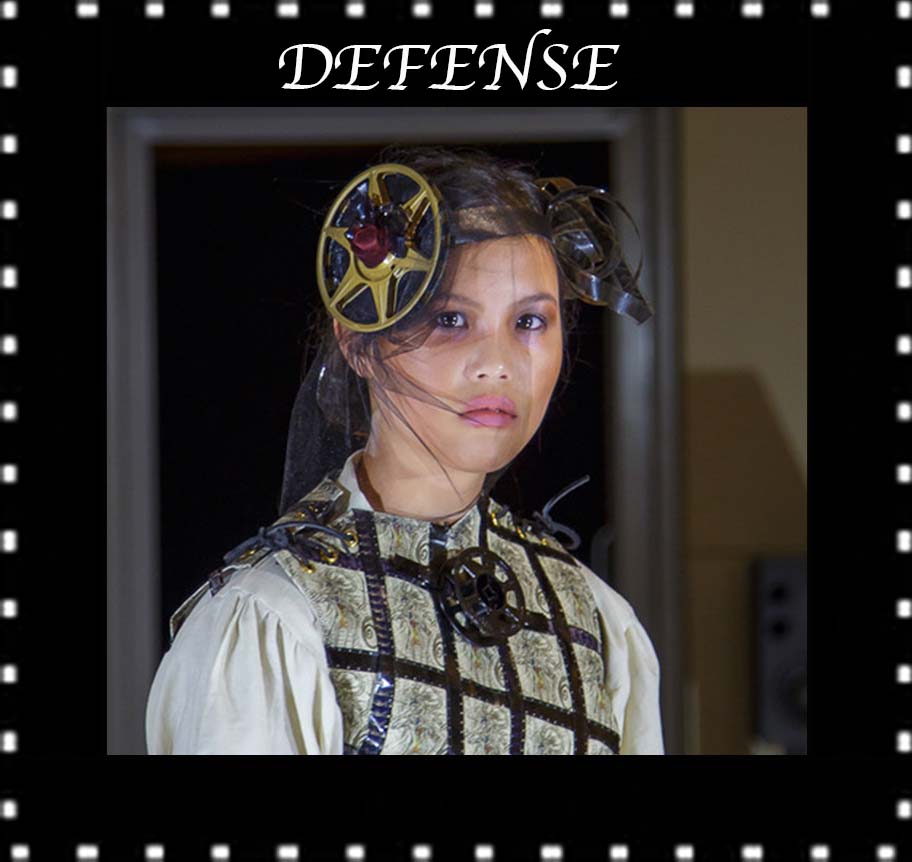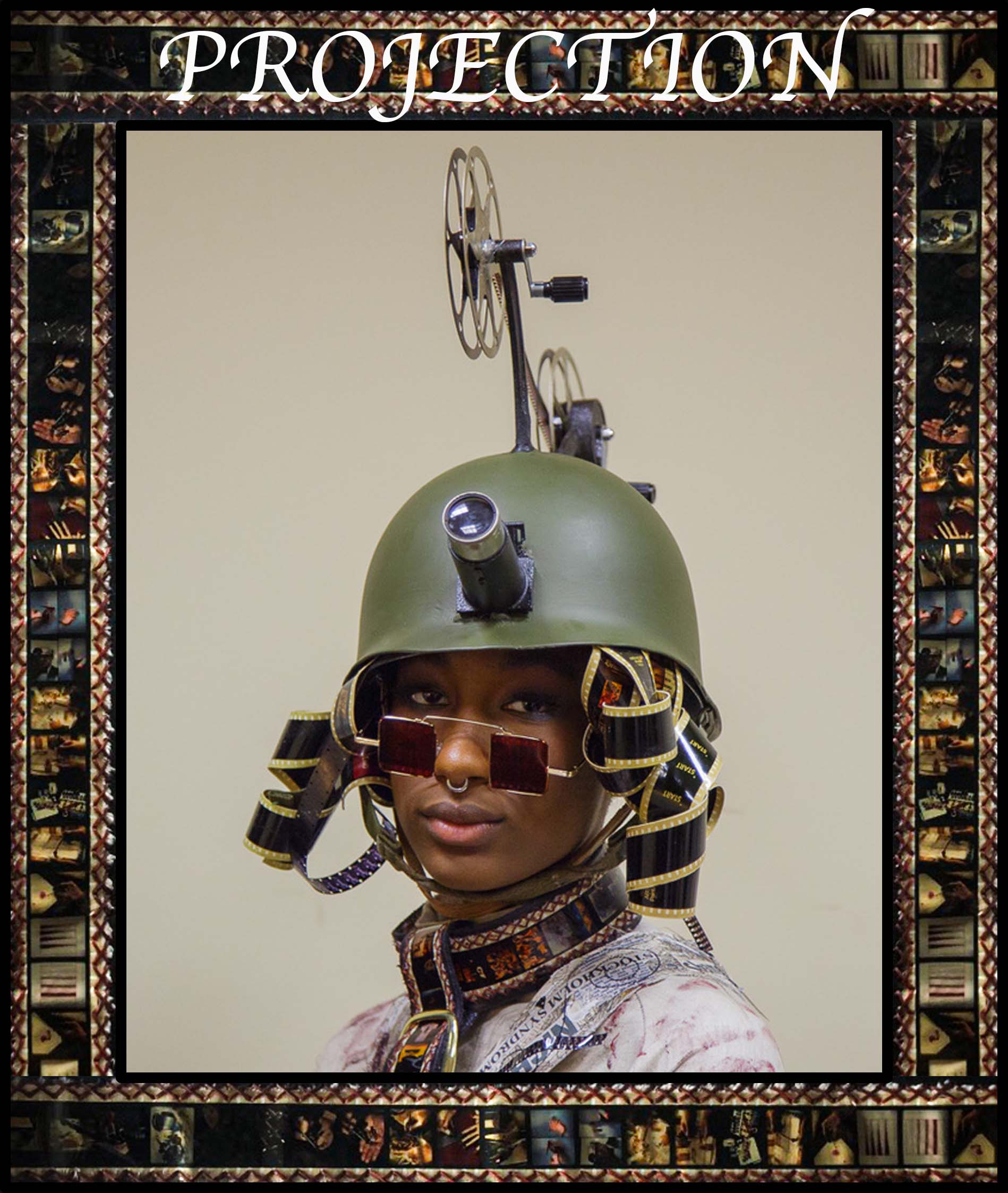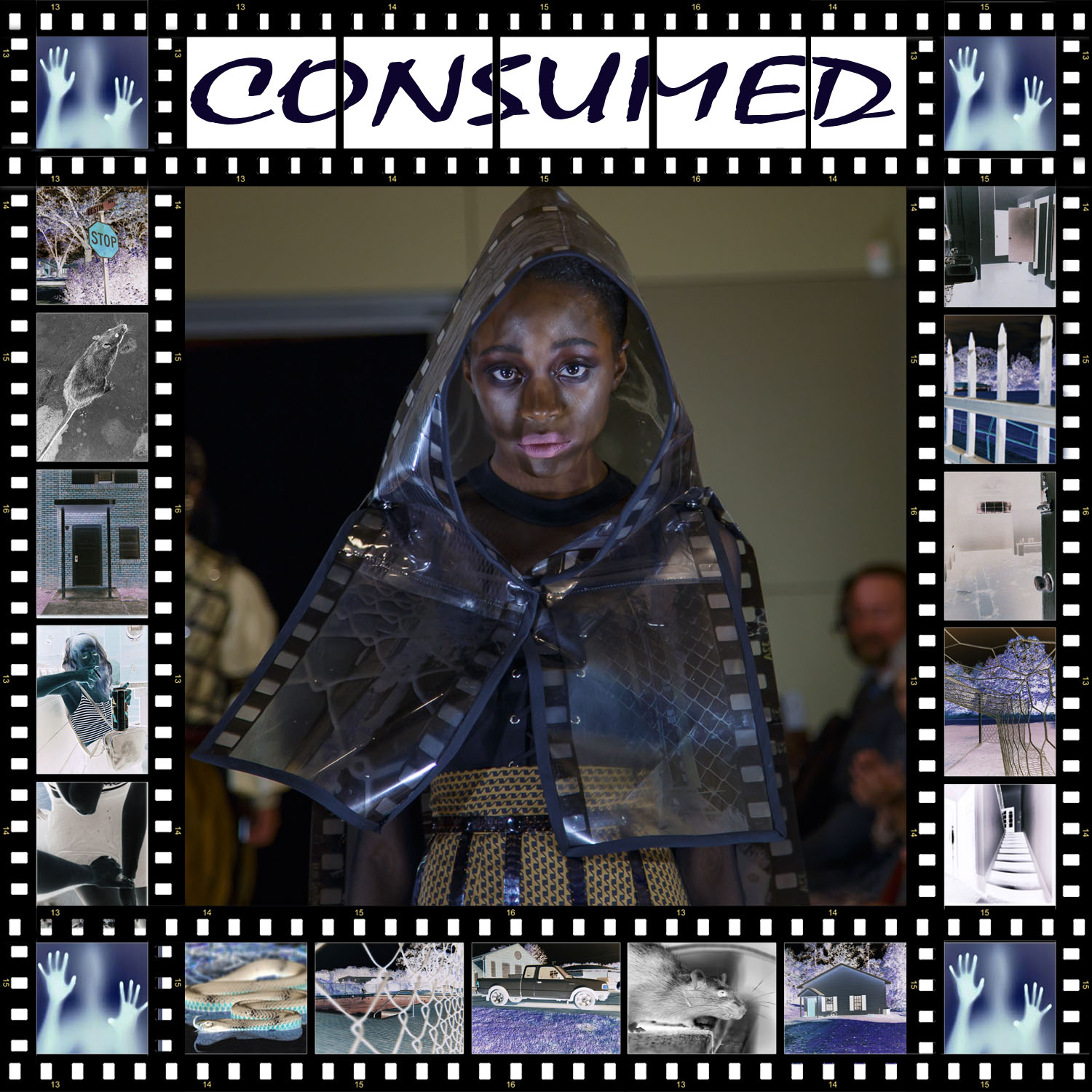
This look embodies the defense mechanisms of denial, compartmentalization, and dissociation in response to trauma. Inspired by the medieval times of fencing, the defense look is representative of the hyper-vigilance that survivors with PTSD may experience on a daily basis.
This survivor psychologically defends and shields herself from remembering events in her past that bring on tremendous amounts of pain, shame, and confusion by denying her past and dissociating from it.
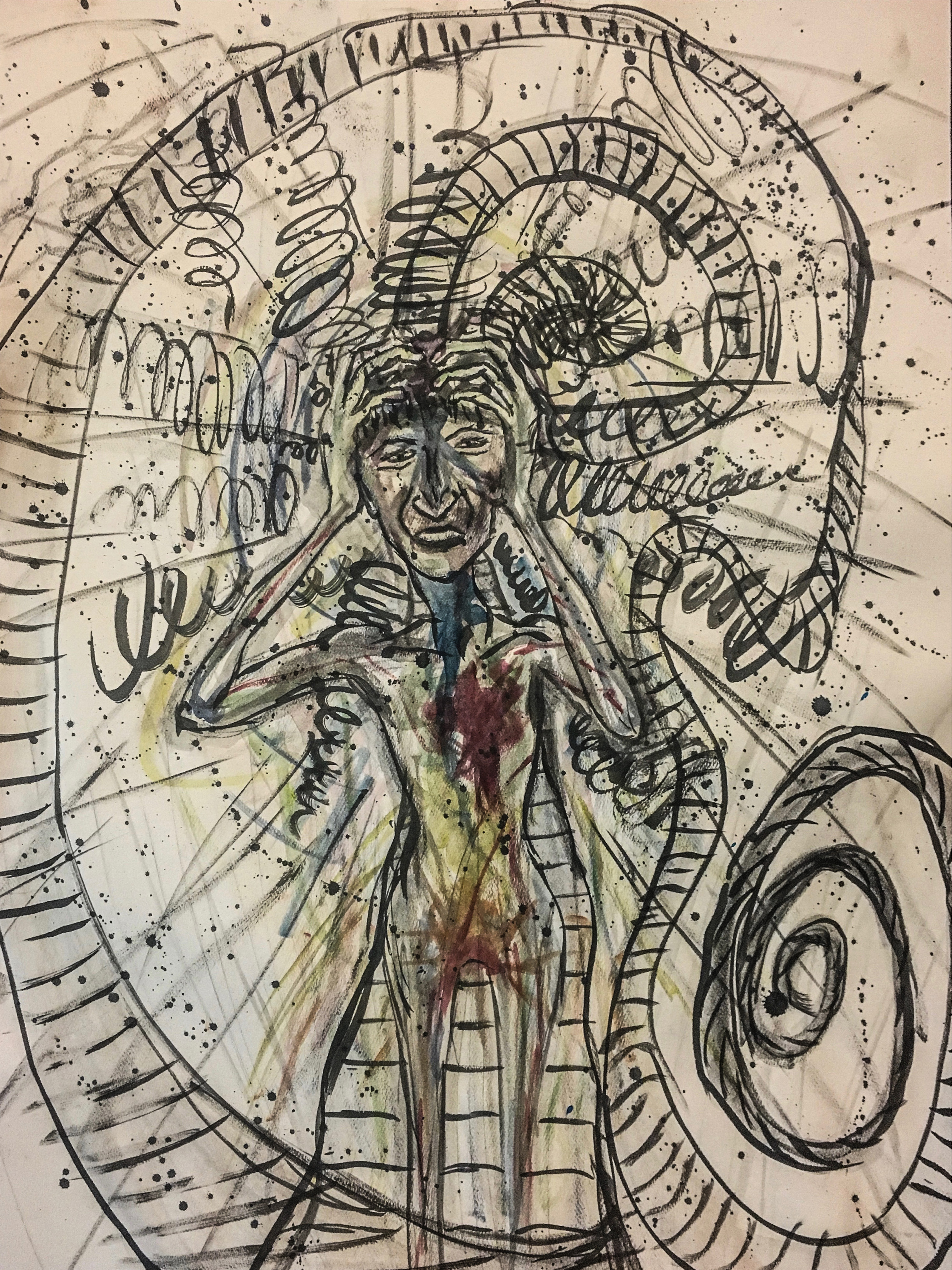
The print pattern on the canvas vest is from a painting I created depicting the psychosomatic experience of being gaslit post-trauma.
It represents a survivor in the midst of questioning her reality and sanity, conflicted with body sensations of colorful emotions that confirm her memory and experiences of her trauma while simultaneously being bombarded with opposing victim-blaming narratives from her outer world.
At the cellular level, the colors within the gaslit figure represent somatic flashbacks, memories of trauma trapped within the body.
The gaslit figure, enclosed within individual frame cells, reflects dissociative compartmentalization as a protective response to trauma. At a larger scale, the repeating pattern speaks to the widespread and often underrecognized prevalence of sexual abuse and assault, shaped by conditions in which many experiences go unreported, unspoken, or are obscured through processes such as dissociation and amnesia.
It also reflects the role of cultural gaslighting, including victim-blaming and slut-shaming narratives, in shaping how these experiences are understood and internalized. The design speaks to the psychological impact of denial and silence surrounding sexual abuse, and to the ways trauma can become embedded within both individual experience and the broader cultural consciousness.


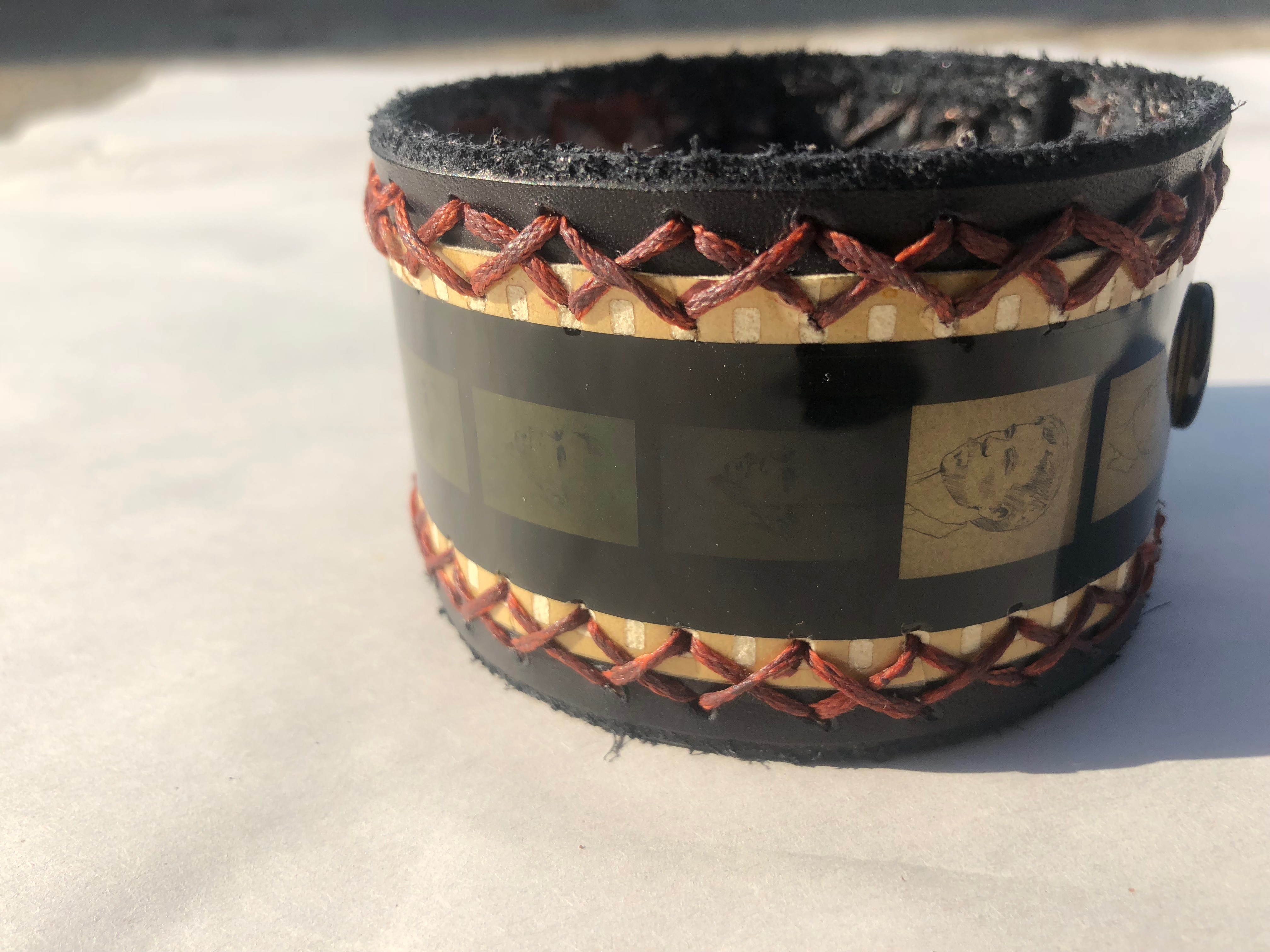
To all the mes and the women not seen, stuck in their cells, victims to the stories they have yet to tell.
To the women unseen, the women once not believed, and alternatively stored her truth, her stories, and her self in a cell because it was not safe to tell.
To the women whose realities were too difficult to bear, whose stories were denied and told it wasn’t real.
With films interweaving like crossroads it leaves each gas lit figure locked in a cell of the past.
Each woman is screaming with a story to tell, locked in a cell by cell, fragments of herself.
Storing these stories in every cell of her body, locked in a frame by frame of film.
Crying women. Denied women. Helpless women. Weeping women. Victim Blaming. Victim Shaming. Violated. Perpetrated. Manipulated. Not believed. No.No one would believe her.
She put up her defenses and disconnected from her reality. Dissociated from her body to not feel the somatic memories. She left her body bleeding colors of emotions frozen in isolated celled compartments. She left herself in the dark rooms of her past and convinced herself that it never happened.
Compartmentalization, dissociation, isolation, shame, and self-blame.
Who is to blame? Who is to blame?
Fueled by the silence epidemic. Serving oppressive power dynamics. Denied and leaving ourselves to blame. Leaving ourselves to blame.
She was manipulated to think this way. To doubt herself. She abandoned herself, further programmed herself. Adopting these customs and social constructions.
She avoided reminders. She put up her blinders. She became very good at fencing and convincing herself that it wasn’t real.
Lock them in their cells. It wasn’t safe to tell and so she left them in the dark in isolated cells.
So go back to the time where you feel locked inside and retrieve these parts of yourself. Acknowledge these women, unlock their cells, and listen to the stories each woman has to tell.
Frame by frame, reclaim the power that’s been silenced within and shift the blame. Put it in their name. You were never to blame.
You were never to blame.